
Your orthodontist just said the words: “Your child is ready for treatment.” Now you’re staring at a treatment plan with two very different options. Traditional braces or clear aligners like Invisalign.
Your teenager has already made up their mind based on what their friends have. But you are the one writing the check. So how do you actually decide?
At Children’s Dental Specialties in Worcester, MA, Dr. Daniel Moheban and our team help local families make this choice every week. We’ll explore treatment with braces vs. clear aligners for teens and what to expect during each orthodontic treatment.
Traditional Braces: The Tried-and-True Workhorse
Braces have been around forever because they work. Really well. Metal brackets bonded to each tooth. A wire running through them. Tiny rubber bands (elastics) that get changed at each visit. The wire gets tightened over time, gradually moving teeth into place. Our office offers multiple types of braces based on the needs of your child.
What parents like:
- You don’t rely on your teen to remember to wear anything
- They can treat almost any orthodontic issue, from mild to severe
- Usually less expensive than aligners
What teens don’t love:
- Food restrictions (no popcorn, sticky candy, or chewing gum)
- More brushing time to clean around brackets
- The look (though modern braces are smaller than they used to be)
Clear Aligners: The Discreet Option
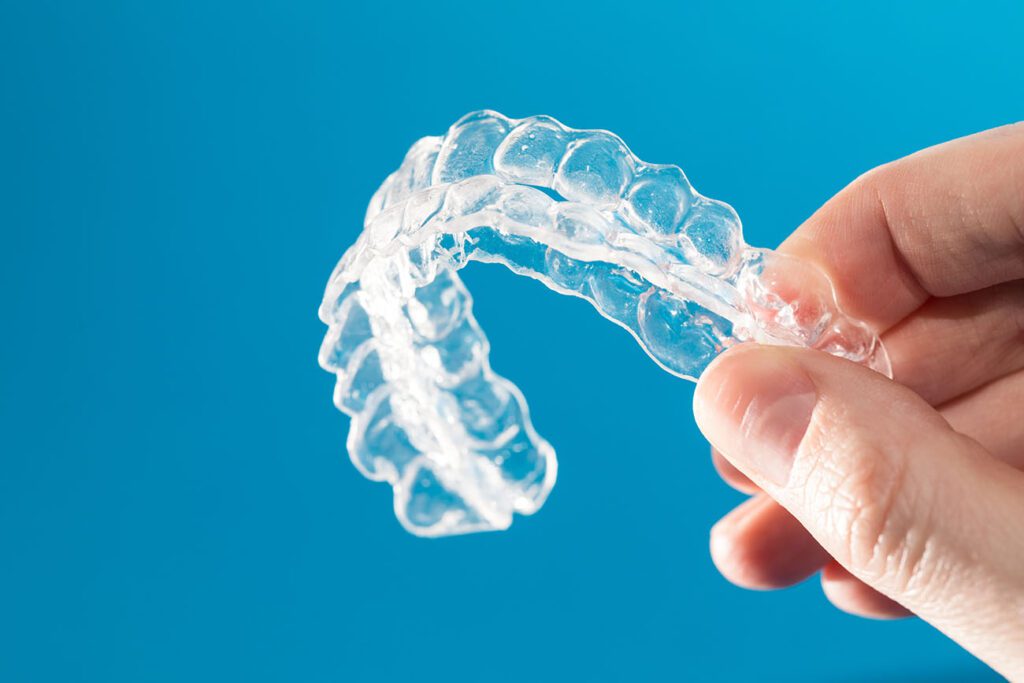
Invisalign and similar systems use a series of clear, removable plastic trays. Your teen wears each set for about two weeks, then switches to the next one. Gradually, their teeth shift.
What teens love:
- Nearly invisible
- No food restrictions (take them out to eat)
- Easier to brush and floss normally
- Fewer emergency visits for broken brackets
What parents worry about:
- It only works if your teen actually wears them (20-22 hours a day)
- Lost aligners get expensive to replace
- Not ideal for complex bite issues
The Big Question: Will Your Teen Actually Wear Them?
This is the dealbreaker. If your teen is responsible, remembers things without being reminded, and genuinely wants straighter teeth, aligners are a great choice. We see plenty of teens who ace this.
If your teen loses their phone, their jacket, and their homework on a weekly basis, aligners become a very expensive gamble. Those trays cost money to replace. Every hour they are out is an hour teeth are not moving.
Braces remove that variable. They are on 24/7 whether your teen thinks about them or not. This is one of the most important factors in the braces vs. clear aligners decision.
What About School and Social Life?
We hear this from parents constantly. “My teen is worried about being called Brace-Face.” But most kids do not care. Braces are so common now that they barely register. Clear aligners are equally common. No one really gets teased either way.
What does matter is confidence. If your teen is self-conscious about crowding or gaps, they will feel better during treatment. They will feel a lot better when it is done.
So when weighing braces vs. clear aligners, social concerns may not be as big a factor as you think.
Treatment Time: What to Expect
Both braces and aligners take time. The average orthodontic treatment lasts 18 to 24 months. Some cases are shorter. Some are longer.
With braces, the time is predictable. The orthodontist controls every step. With aligners, the time depends on how well your teen wears them. If they wear them as instructed, the timeline is similar to braces. If they do not, treatment takes longer.
This is another key point in the braces vs. clear aligners discussion. Compliance affects the outcome.
Cost Is Not the Same
This isn’t a one-size-fits-all number. Generally, aligners run slightly higher than braces because of the lab fees for custom tray manufacturing. Your specific treatment length and complexity also affect the total.
We always go over the exact costs during your consultation. We are upfront about what insurance covers.
The Role of Retainers
After treatment, your teen will need a retainer. This is true for both braces and aligners. Retainers keep teeth in their new position. Without them, teeth can shift back.
For aligner patients, the last set of trays can sometimes serve as a temporary retainer. But a permanent retainer or a custom retainer is usually recommended.
What Happens If an Aligner Is Lost?
Lost aligners happen. A teen may leave them at a restaurant. They may wrap them in a napkin and accidentally throw them away.
When an aligner is lost, you have two options. You can move to the next set if your teen is near the end of that tray. Or you can order a replacement, which takes time and costs money.
With braces, there’s nothing to lose. This is a practical difference in the braces vs. clear aligners decision.
Improve Your Child’s Bite Today
Bring your teen into the conversation. Let them hear the pros and cons from us. Let them ask questions. And then make the decision together.
We’ve been serving families from Worcester, Shrewsbury, Grafton, Northborough, and Boylston since 1968. We’re not here to sell you on one option. We’re here to help you pick the right one for your child.
Ready to talk through the choice? Call us at (508) 625-5534 or request an appointment online. We’ll walk you through everything.